PROBLEMATIC CONSONANTS
This chapter will help you fix the most common consonant errors that non-native speakers of English make. In some cases, the pronunciation of these sounds is exclusive to American English; in other cases, correct pronunciation can be difficult for a non-native speaker if that particular sound does not exist in his or her native language.
The Various t Sounds of American English
We’ll start with one of the most distinctly American consonants, the letter t. The t can be pronounced in several different ways, depending on its position in a word and depending on the other sounds that surround it. Sometimes t sounds more like a d (as in water and atom), and sometimes it is not pronounced at all (as in often and interview). Other times it’s barely pronounced as in but and cat. Also, it can change to a different sound when it is followed by an r sound, as in try or truth.
The Held t
As a simple awareness exercise, let’s first practice saying the /t/ sound so that you get a feeling of where in the mouth it occurs. Repeat saying the t: “ttttt.” You will notice that the tip of your tongue is touching and releasing your gum ridge, which is the upper part of your mouth, right behind your front teeth. Try it again: “ttttt.” This is what we call a fully pronounced t. The tongue touches and releases.
Now say the following two words which end with a t: cat, right.
Say them again; this time do not release the t. Just let your tongue stay on top, touching the gum ridge, with no air coming out when you say the t. This is called the “held t.” The other way to make this kind of silent t is just to press the vocal cords together to stop the airflow, and then release.
The letter t is generally held at the end of words and before consonants within words. This “held t” is very common in American English. Using it will help you to sound more like a native speaker since non-native speakers almost always tend to release the t when speaking English. Note: You will sometimes hear Americans release the final t. If they do, it’s usually at the end of a phrase or a sentence, or for special emphasis of a word. For example: “That’s great!” “It’s so hot!” There is no absolute rule about always holding the t, but keep in mind that if you release the t at the end of every word, it will sound like a foreign accent.
Words for Practice
Word Contrasts for Practice
For the second word of each pair, the final “held t” interrupts and shortens the preceding consonant.Did you say can or can’t?
The silent t is one of the reasons why you may have a hard time hearing the difference between the words “can” and “can’t.” Listen for the held “t” for “can’t.” Also the vowel in the word “can’t” is usually longer because negative auxiliaries are stressed more than affirmative auxiliaries within sentences. You can learn more about word stress in Chapter Six.
Held t + Consonant
A. Always hold the final t when the next word begins with a consonant.B. Always hold the t when the next letter within the same word is a consonant.
Practice Sentences

Make a list of the most common words that are used in your workplace, or if you are a student, the terminology in your field of study. Find out the correct pronunciation of these words. Also, master the pronunciation of the name of the company that you work for and the names of your American co-workers. This will greatly add to your confidence level when you are speaking in professional situations.
Held t Before /n/ Sound
When t is followed by an /n/ sound within a word, make sure you hold the t. For example, when pronouncing button, hold the t as in but, and then add an /n/ without releasing the tongue from the gum ridge: “but + n.”
Words for Practice
Practice Sentences
Silent t After n
The t after an n is often silent in American pronunciation. Instead of saying internet Americans will frequently say “innernet.” This is fairly standard speech and is not considered overly casual or sloppy speech.
Words for Practice
Practice Dialogue for Silent t
When t is Between Two Vowels
When a t is between two vowels, it is generally pronounced like a fast /d/ sound. It also sounds the same as the “rolling r” sound of many languages, when the tip of the tongue touches the upper gum ridge. This sound is also sometimes called a “tapped t” because you quickly tap the tip of the tongue on the gum ridge when pronouncing it.
A t becomes a “fast /d/” in the following cases:
Note: A t does not change to a “fast /d/” sound if it’s within a stressed syllable. We don’t say: “adack,” we say “attack.”
Words for Practice
When t is Between Two Words
This “fast /d/” sound also occurs between two separate words when the first word ends with a vowel + t and the next word begins with a vowel. Again, this is not sloppy or casual speech; it is a standard American accent.
Word Groups for Practice
Practice Sentences
1. I’ll eat it a little later.
2. I bought an auto battery for forty dollars.
3. Peter wrote a better letter.
4. I’d better go to the meeting at eleven.
5. He met her at a computer store in Seattle.
6. It’s a pity that he’s getting fatter and fatter.
7. Tell the waiter to bring it a little later.
8. He bought a lot of bottles of water.
9. Betty’s knitting a little sweater for her daughter.
10. It’ll be better if you heat it before you eat it.
The “Fast d ” Sound
In addition to the standard /d/ sound as in words like dog, day, and bed, there is another kind of /d/ sound that occurs between two vowels and also before an l. It sounds exactly like the t between two vowels and is often called “fast /d/.” Again, it’s a sound made with the tip of the tongue quickly tapping the gum ridge.
Word Pairs for Practice
The following word pairs sound the same even though the first word is spelled with a “t” and the second word is spelled with a “d.” Since the d and t are both positioned between two vowels, they sound identical.Words for Practice
Word Pairs for Practice
Practice Sentences for “Fast d”
Note: Remember, if the d is within a stressed syllable, even if it is surrounded by vowels, the “fast d“ rule does not apply.
The /tʃr/ Sound: tr
When a t is followed by an r sound, the t changes and becomes an almost /tʃ/ or “ch” sound. To create this sound correctly, say /tʃ/ as in chain, but just make the tip of the tongue a bit more tense when it touches the gum ridge, and focus on creating a stop of air.
Practice Words
The /dʒr/ Sound: dr
When d is followed by an r, the /d/ sound changes and becomes an almost /dʒ/ sound.
Practice Words
Practice Dialogues for tr and dr
The /dʒ/ Sound: du and d + y
When a d is followed by the vowel u, they usually blend to create the sound /dʒ/ which is much like the sound j makes in a word like joke.
Words for Practice
Words for Practice
Similarly, d followed by y usually produces the /dʒ/ sound.
The /ʧ/ Sound: tu and t + y
In many words, when a t is followed by a u, the resulting blended sound is /ʧ/ which sounds like the ch in church.
Similarly, a final t followed by a y usually calls for the /ʧ/ sound.
Practice Sentences
Words Ending in -ed
The final ed forms the past tense of regular verbs (such as needed and worked) and of some adjectives (such as interested and tired). The ed can cause problems for some non-native speakers because it can be pronounced in three different ways: as /Id/, /d/, or /t/. Here are the three rules you need to know when pronouncing -ed.
Rule 1
If the last letter of the word is spelled with a d or a t, the ed is pronounced as /Id/ and as a separate syllable.Rule 2
If the last letter of the word ends in a voiced consonant or a vowel sound, the e is silent and d is pronounced as /d/. (Reminder: Voiced consonants are /b/, /d/, /g/, /v/, /m/, /n/, / r/, /l/, /z/, /ʤ/, /y/, and /ð/.)Rule 3
If the last letter of the word ends in a voiceless consonant, the e is silent and the d is pronounced as /t/. (Reminder: Voiceless consonants are /p/, /t/, / k/, /f/, /s/, /ʃ/, /tʃ/, and /θ/.)Practicing the -ed Sounds
In the spaces provided, write the correct past tense sound of -ed in the following verbs. (Is it /Id/, /d/, or /t/?)
Linking ed Ending and a Vowel
Linking is connecting the final sound of one word to the first sound of the following word. You will need to learn to link words together to create smooth, natural speech. This is discussed in much greater detail in Chapter Eight, “Sound Like a True Native Speaker.” It is especially important for you to learn to link words with ed endings. The final /t/ and /d/ sounds are much easier to pronounce if they are connected to the vowel that follows it.
Words for Practice
More Linking Practice: -ed + it
Practice linking the final consonant to the word it.
/Id/ verbs
/t/ verbs
/d/ verbs
Practice Dialogues for -ed Verbs
Practice Dialogues
The Job InterviewListen to the -ed endings of the past tense verbs and try to determine which of the three possible sounds you hear: /d/, /t/, or /Id/. In the first part of the job interview, each of the -ed verbs is followed by a word that starts with a vowel. Make sure you are linking these two words.
/ɪd/ /ɪd/ /d/
The th Sound
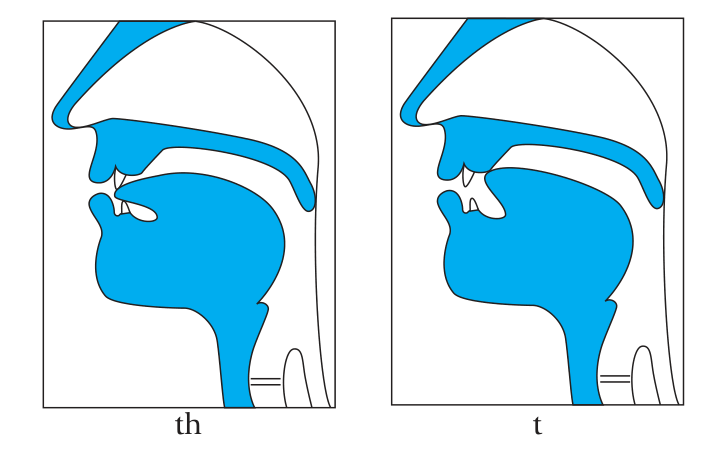
One of the most difficult consonant sounds for non-native speakers is the th or / / sound and the /ð/ sound. Remember that for this sound the tip of your tongue should touch the edges of your front teeth, and the tip of the tongue vibrates a bit while air flows out through your tongue and upper teeth. It’s also acceptable to just touch the back of the front teeth as long as the air is flowing through.
There are two th sounds in English: the voiced th as in that, and the voiceless th as in think.
Practice Words for /θ/ (voiceless th)
Word Pairs for /θ/ (voiceless th)
Voiceless th Versus t
Some non-native speakers incorrectly pronounce the voiceless th as a t and the following words end up sounding the same.
To correct this problem change the position of your tongue by moving it forward to touch the teeth. Also, make sure that there is a flow of air between your tongue and your teeth.
Practice Words for /ð/ (Voiced th)
Word Pairs for /ð/
Voiced th Versus d
Some non-native speakers incorrectly pronounce the voiced th as a d. The following words end up sounding the same.
Again, to correct this problem change the position of your tongue by moving it forward to touch the teeth. Also, make sure that there is a flow of air between your tongue and your teeth.
Make sure that your tongue vibrates under your upper teeth. Do not bite your tongue or press it on your upper teeth too strongly—this will block the flow of air that is required to produce the th sound correctly.
Word Contrasts for Practice Note the difference between the words with t and those with the voiceless th or /θ/.
Sound Contrasts for Practice
Note the difference between the words with d and those with the voiced th or /ð/.
Practice Sentences for Voiced and Voiceless th
Practice Sentences for th Versus d
When the th and d are very close together, the tip of your tongue must move quickly from touching the teeth to touching the gum ridge so that both sounds can be distinctly heard.
Comparing th with s and z
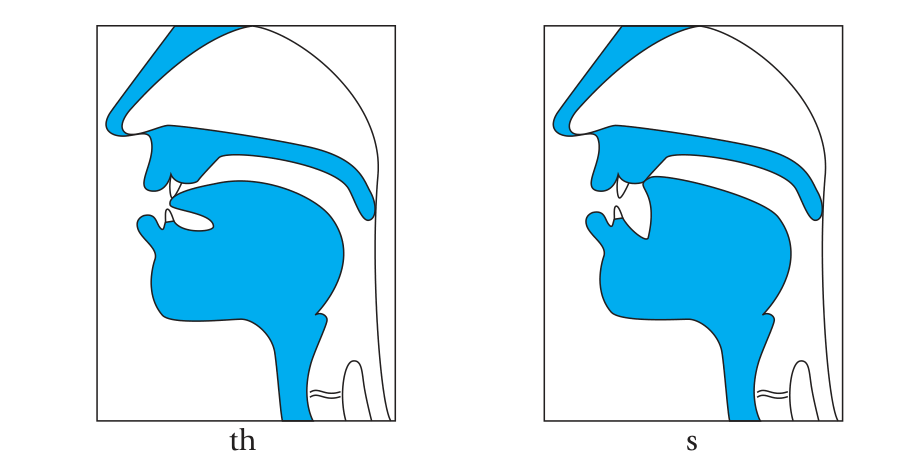
Some people wrongly pronounce the voiceless th as an s. They say sank and thank the same way. They also tend to wrongly pronounce the voiced th as a z. They say breeze and breathe the same way. Again, the mistake lies in the position of the tongue. For the s and z, there is also air passing through the tip of the tongue, but the tongue is not touching the teeth. It is touching a little bit behind, on the gum ridge. Pay attention to these tongue positions shown in the illustrations below as you do the following exercises.
Word Contrasts for s Versus th
Word Contrasts for z Versus th
Word Pairs for Practice
It’s especially difficult to pronounce the th sound correctly if the z and s are nearby. Make sure that all of the consonant sounds are clearly heard. Don’t blend them together and don’t substitute one for the other.Practice Sentences for th Versus s and z
The American /r/
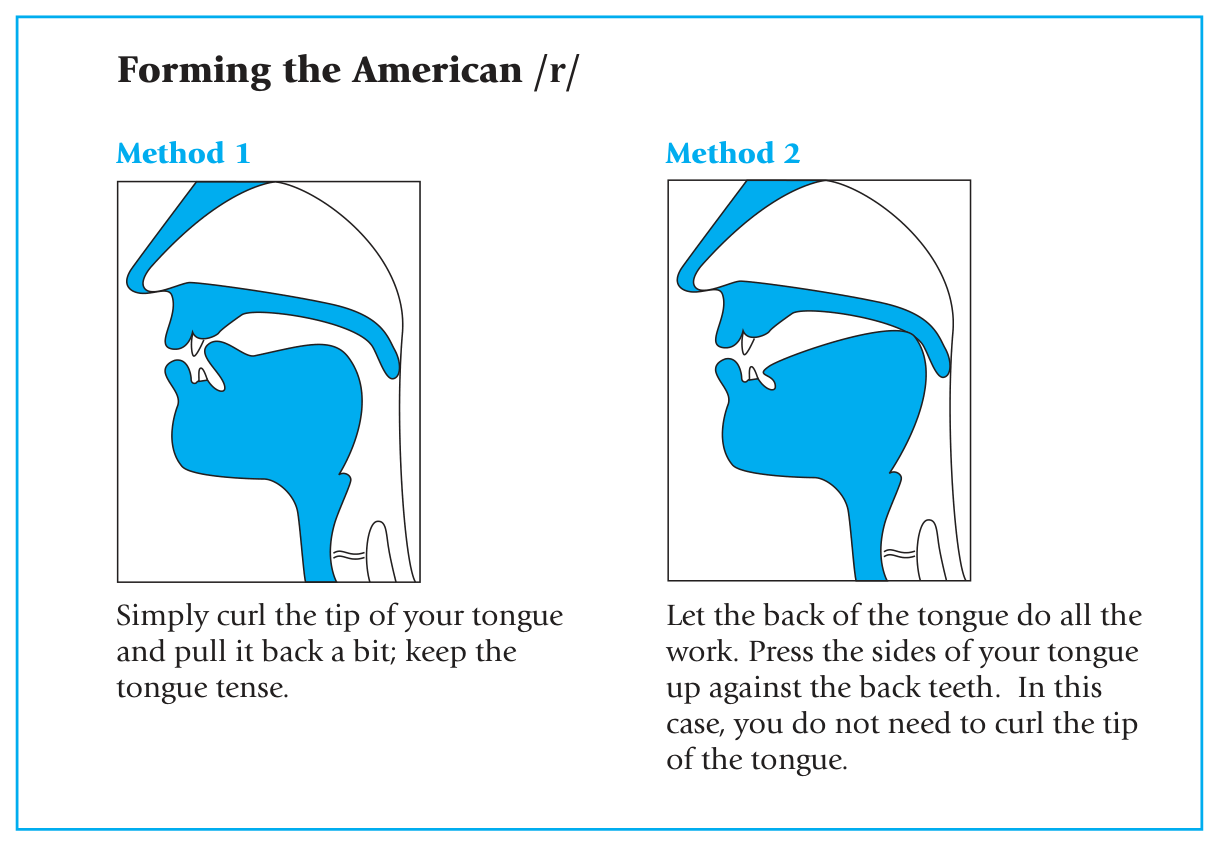
Many languages have what is called a “rolling r,” where the tip of the tongue touches the gum ridge, similar to the /d/ sound, but with a quick and repeated motion. In contrast, the American /r/ is produced in the back of the mouth and the tip of the tongue never touches anywhere inside the mouth. There are different ways to produce the American r. Try the two described below and decide which one is easier for you.
Words that End with r
Unlike the British r, the American r is always pronounced. It’s never silent. Pay particular attention to r when it appears at the end of a word: for, more, far, and teacher.
Words for Practice
Word Groups for Practice
All of the following words have an r at the end. Make sure you pronounce each one clearly.4. sooner or later
R Before a Consonant
The r before a consonant is always pronounced in American English, but generally not pronounced in British English. Americans say: “morning,” “first,” “modern.” In British English, these words are pronounced as: “moning,” “fist,” and “moden.”
Word Pairs for Practice
Practice Sentences
Story for Practice
Surprise Birthday PartyOn Saturday afternoon at four, we’re having a surprise birthday party for our daughter Rachel. She’ll turn thirteen. Her cousins Charles and Barbara will arrive early to help prepare. We’ll take pictures, play cards and some board games. We’ve ordered a birthday cake and her favorite dessert, strawberry ice cream. We’ve invited about thirty of her friends and told them to come over before four. We hope all her friends get here by four before Rachel returns from the park. When they’re all here, we’ll call Mark to bring her over. When they open the front door the lights will be turned off. Her thirty friends will be waiting nervously in the other room. We hope it works out and that Rachel will be really surprised.
“I have collected a list of words that are difficult for me to pronounce. I make up sentences from these words and I practice saying them over and over.” B1 Miroslav Nikolic, Serbia
The American /l/
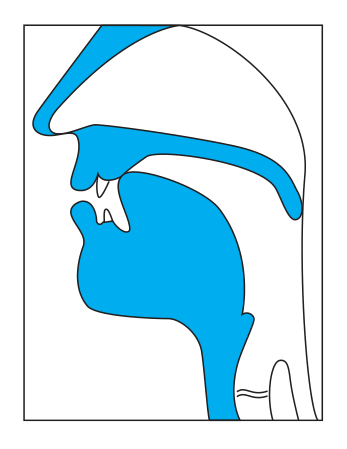
For the American /l/ sound, the tip of the tongue touches the gum ridge behind the upper teeth, just the same as when creating the /t/ and /d/ sounds. See the image below for correct tongue placement. The air stream flows through the sides of the tongue. When the /l/ occurs at the end of a word, make sure you don’t release it quickly as you would do with a /t/ or /d/. This will make your /l/ sound foreign. The American /l/ is softer and longer than the /l/ sound of many other languages.
Don’t round your lips when you are saying the /l/ sound. This will weaken it and make it sound more like a /w/.
Words for Practice
Word Pairs for Practice
l Before a Consonant
For Asian speakers, the /l/ is particularly difficult to pronounce when it is followed by a consonant. If you don’t move your tongue correctly, the words code and cold will sound the same.
Word Contrasts for Practice
Practice the following word pairs, making sure you clearly pronounce the /l/ of the second word.Practice Sentences
Long Vowels + /l/
When a long vowel is followed by an l, place an extra /ɘ/sound (schwa) in between. For the word feel, say “fee-ɘl.” It’s almost as if you are adding an extra syllable.
Words for Practice
Word Pairs
Understanding /l/ Versus /r/
If your tongue is not touching the right place, your /l/ will sound like an /r/. For example, the word wall might sound like war. To correctly pronounce the /l/, make sure that the tip of your tongue is in the front, near the upper front teeth when it touches the top of your mouth. If the tip of your tongue is pulled farther back in the mouth, it might sound like an /r/ instead. Use a mirror to see the position of your tongue for the /l/ sound.
/l/ and /r/ in the final position
Pay attention to the position of your tongue as you practice these two final sounds. Prolong the sounds as you concentrate on what your tongue is doing.
Sound Contrasts for Practice
Consonants + r and l
When the /r/ or /l/ sound comes after a consonant, make sure that it is strong enough to be clearly heard. Fully pronounce the first consonant before you begin the /r/ or the /l/. Otherwise, the words fright and flight will end up sounding like “fight.” You can even add a short /ɘ/ sound between the two consonants.
Word Contrasts for Practice
Practice Sentences
Review of /r/ and /l/
Practice Dialogues
Poems for Practice
AlchemyI lift my heart as spring lifts up A yellow daisy to the rain; My heart will be a lovely cup Altho’ it holds but pain.
For I shall learn from flower and leaf That color every drop they hold, To change the lifeless wine of grief To living gold. Sara Teasdale
Barter
Life has loveliness to sell, All beautiful and splendid things, Blue waves whitened on a cliff, Soaring fire that sways and sings, And children’s faces looking up, Holding wonder like a cup.
Life has loveliness to sell, Music like a curve of gold, Scent of pine trees in the rain, Eyes that love you, arms that hold, And for your spirits still delight, Holy thoughts that star the night.
Spend all you have for loveliness, Buy it and never count the cost; For one white singing hour of peace Count many a year of strife well lost, And for a breath of ecstasy Give all you have been, or could be. Sara Teasdale
“My friend and I are both Chinese and both are studying accent reduction. We get together and speak only in English and we try to correct each others’ mistakes. We are able to point out a lot of mistakes to each other even though we are not American. We have learned what our main weaknesses are, and it’s now just a matter of reminding each other and practicing in order to break those old habits.”
The /v/ Sound
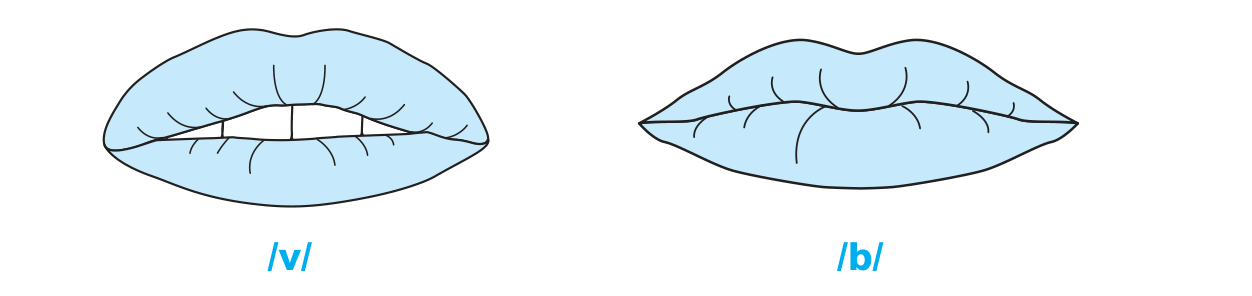
To produce the /v/ sound correctly, make sure the lower lip touches the upper teeth. (See illustration below.) People who speak quickly have a tendency to drop this sound at the end of words. Others may confuse it with an /f/ sound, and some others change it to a /b/ or a /w/ sound.

Words for Practice
Practice Sentences
Understanding /b/ Versus /v/
Non-native speakers of some languages have a hard time distinguishing between the /b/ and /v/. Remember, for /v/, the upper teeth touch the lower lip. For /b/, both lips touch and fully close so that no air escapes. Examine the illustrations below to see the difference.
Word Contrasts for Practice
Word Pairs in Sentences
Practice Sentences
The /w/ Sound
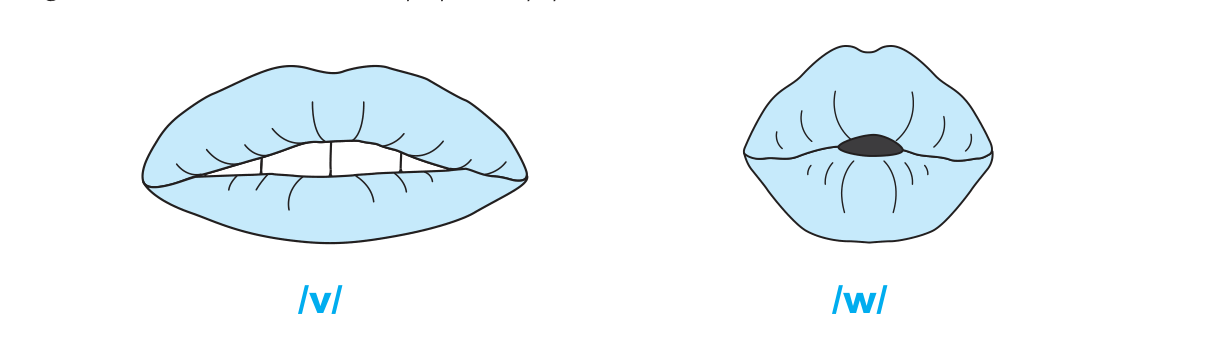
The /w/ sound requires the lips to be fully rounded and pushed forward a bit as in the illustration below. Many non-native speakers confuse the /v/ and the /w/ sounds. To avoid this mistake, make sure your bottom lip is not touching your upper teeth when you are saying the /w/. Let’s first practice the /w/ to make sure you are pronouncing it correctly. Then we will practice /v/ and /w/ together.

Words for Practice
The /kw/ Sound
Words that are spelled with qu are pronounced as /kw/.
Word Pairs for Practice
Practice Dialogue
Winter WeatherUnderstanding /v/ Versus /w/
Note the different lip positions in the illustrations below as you work through the following exercises. Do not confuse /w/ with /v/!
Word Contrasts for Practice
Word Pairs for Practice
Practice Sentences
The /s/ and /z/ Sounds
The letter s is sometimes pronounced as a /z/ sound and sometimes as a /s/ sound. When s follows a consonant, there are rules for pronunciation, but when it follows a vowel there are no rules—so it’s best to just memorize the exceptions. Studying the four basic rules below will also be helpful to you.
The letter z is never pronounced as an /s/ sound. If your native language is Spanish, compare the way Americans pronounce common Spanish last names (such as “Gomez” or “Alvarez”) with the way you pronounce them in Spanish.
Rule 1
When an s follows a voiceless consonant, it is pronounced as /s/.Rule 2
When an s is followed by a voiced consonant or a vowel, it is pronounced as /z/.Rule 3
Double s is pronounced as /s/.exceptions: possession, scissors, dessert (ss sounds like /z/)
Rule 4
An extra syllable is added to words that end with certain consonant sounds followed by s. These include:Memorize these very common words that have a final s. The s is pronounced as /z/ and not as /s/.
Note that the s in the prefix dis– is pronounced as /s/ and not as /z/.
Verbs and Nouns and the Letter s
The following words spelled with an s have a /z/ sound when they are verbs but have a /s/ sound when they are nouns.
Dialogues for Practice
Practice Sentences
Remember to pronounce all of the final /s/ sounds of plural nouns. Also pronounce the final /s/ of verbs in the third person singular form (he, she, it). Say the following sentences quickly, making sure that you are not forgetting the s endings.Make sure you are not pronouncing the words this and these the same way.
Story for Practice
Mark’s Day/s/ /iz/ /iz/ /s/ Every morning he gets up early, brushes his teeth, washes his face, and eats breakfast. /iz/ /z/ /s/ /iz/ /iz/ He kisses his wife and kids goodbye. He takes two buses to work. He usually manages /z/ /z/ /s/ /iz/ /z/ to get to work before his coworkers. He reads his email, checks messages and returns /z/ /s/ /z/ /s/ /s/ /z/ phone calls. He speaks with his colleagues and clients and conducts meetings. /iz/ /s/ /s/ /s/ He focuses on his daily tasks and likes to take only 30 minutes for lunch.
The /ŋ/ Sound: Pronouncing ng
In American English, the final g in the word ending -ing should not be dropped, but it should not be over pronounced either.
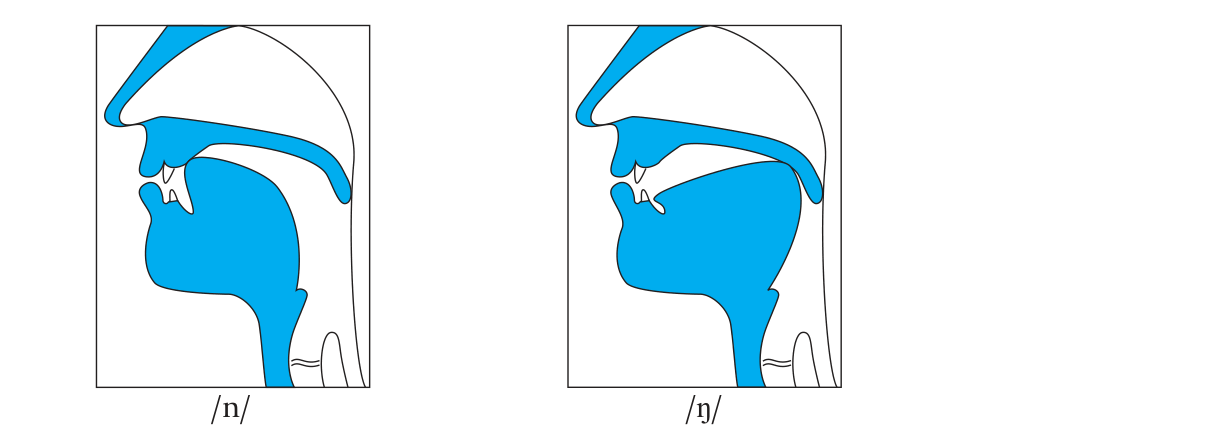
Don’t say: “I’m goin shoppin.” And don’t say “I’m going shopping” by releasing the g too strongly. To create the /ŋ/ sound raise the back of the tongue and let it touch the soft palate, which is the soft area at the rear of your mouth. Don’t release your tongue when you pronounce /g/, or just release it slightly. The mistake of saying “goin’ shoppin’ ” is that the tip of the tongue is touching the area right behind the upper front teeth to create a /n/ sound. And if you say “going shopping,” the mistake is that the /g/ is released too much.
Words for Practice
Word Pairs for Practice
Practice Sentences
Confusing n and ng Endings
Remember, for /n/ as in thin, the tip of the tongue touches the gum ridge, just behind the teeth. For the /ŋ/ sound as in thing the tip of the tongue is down, not touching anywhere. The back of the tongue is up, touching the soft palate which is located in the back of your mouth. Examine the illustrations below to see the difference.
Word Contrasts for Practice
Consonant Clusters
Two or more consonant sounds together are called “consonant clusters.” Many languages do not have any words with consonant clusters. Therefore, when native speakers of these languages speak English, they tend to skip one or more of the consonants. Make sure you pronounce every consonant sound! Pay special attention to words spelled with the letter x since it represents a blend of two consonant sounds: /ks/ or /gz/. Also, many verbs that take -ed in the past tense consist of consonant clusters; for example: watched, stopped, picked.
Common Words with Consonant Clusters
Different Sounds for x
If the vowel following an x is stressed, the x is pronounced as /gz/, as in examine and exist. If an x is followed by a consonant, or if it’s at the end of a word, it is pronounced as /ks/, as in expert and tax. Also, note that a double c often produces an x or /ks/ sound, as in the word accent. If these two sounds don’t occur together in your native language, be very careful to pronounce both of these consonant sounds.
Words for Practice for x and cc
Word Contrasts for Practice
Make sure you pronounce the words in the following pairs differently. Notice that the first word contains just an s sound; the second word contains a k and an s sound and is spelled with the letter x.Practice Dialogue
Words Ending with ts
Make sure you pronounce both the /t/ and the /s/ sounds in the following words. The /t/ will need to be pronounced softly in order to ensure a smooth transition to the /s/.
Words for Practice
Word Contrasts for Practice
Make sure you pronounce the words in the following pairs differently. The first word contains just an /s/ or /z/ sound, and the second word contains a /t/ and an /s/ sound.Practice Sentences
Pronouncing the ds Cluster
Make sure you pronounce both the /d/ and /z/ sounds in the following words. The /s/ is pronounced like a /z/ sound because it’s followed by /d/, which is a voiced consonant. The /d/ will need to be pronounced softly in order to ensure a smooth transition to the /z/.
Words for Practice
Word Contrasts
Make sure that you that you pronounce the following word pairs differently. The first word contains just a /z/ sound and the second word contains a /d/ and a /z/ sound.